
Click HERE for Part 1
Welcome to our People of the Parks blog series. This four-part series is a companion to “You are Here,” our temporary exhibit all about mapping St. Catharines, on at the museum through the end of 2026.
The City of St. Catharines has over 100 public parks. The first one came in 1888 with the opening of Montebello Park, designed by superstar American landscape architect Frederick Law Olmsted. The greenspace at Montebello had already been used for public enjoyment in an unofficial capacity since shortly after the unexpected death of its former owner, William Hamilton Merritt Jr, in 1860.
The late 19th century is considered the first boom era for public park building. This was especially the case in increasingly industrialized and urbanized North American cities where planned greenspaces were introduced as a public health initiative; an antidote for the distress caused by living away from nature. Given this trend, the Montebello’s central location, and the public’s enjoyment of the space, it was only natural for the municipal government to purchase this lot and seal the deal.
And the name? The City did not have to worry about coming up with a moniker for this space, because it had already been dubbed “Montebello” by the late William Hamilton Merritt Jr. Montebello is Spanish for “beautiful mountain” and was inspired by time William spent in Europe for his education. A similar process happened with other early city parks, emerging naturally from already communal spaces and inheriting a pre-established name – think Lakeside Park or Oakhill Park.
But as the 20th century progressed and more and more new parks were established from scratch, names had to be chosen. Several dozen St. Catharines parks are named after people, but over time public memory of that person can fade and be lost. In this blog series, I will be exploring twelve of these “People of the Parks”, sharing biographical information along with some history of the parks themselves.
Each part of this blog series will explore parks located in a particular section of the City of St. Catharines. Rather than follow historical municipal boundaries, the city will be split into four equal parts with three parks in each. Readers can refer to the map below to orientate themselves.


Part 2: Northeast
Welcome to Part 2 of our People of the Parks blog series! This week it’s off to the Northeast section of St. Catharines, including the Grantham and Port Weller communities. Read on for a look into how Malcolmson Eco Park, Wright Brothers Park, and Walker’s Creek Park got their names. Could it be someone you know?
Malcolmson Eco Park
Malcolmson Eco Park is in the community of Port Weller, near the northeast extreme of the City of St. Catharines’ modern boundaries. The park is located on Lakeshore Road between Niagara Street and Bunting Road, just west of Lock 1 of the Welland Ship Canal – the fourth and current canal, that is.
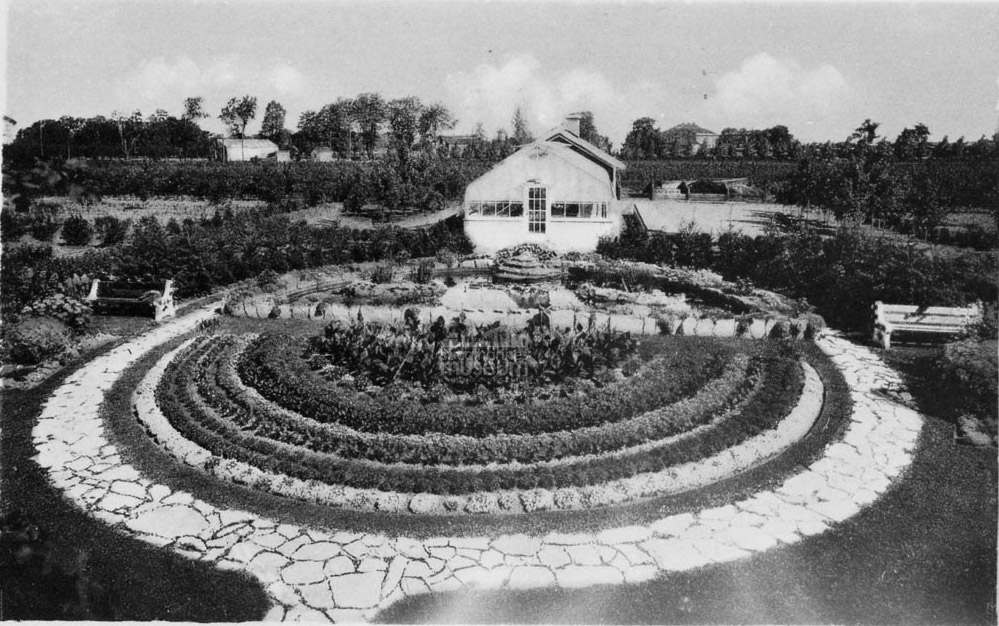
This site has an interesting history as parkland. Manicured greenspace was established in this area beginning around 1875 when the McCalla family bought a plot of land and began felling undesirable trees, leveling hills, and planting gardens. The spot became known as McCalla Park and was a privately operated camping and picnicking destination for weekenders from St. Catharines in the 1890s and early 1900s. Like Montebello Park downtown and Lakeside Park in Port Dalhousie, McCalla Park was born out of a late-19th-century North American revolution in leisure. Better working hours, higher pay, and innovations in transportation meant a lot more recreation amongst the general population, including in St. Catharines. McCalla presented the ideal day trip away from the urban hustle and bustle, while still close enough to be reached by carriage, bicycle, and, later, streetcar.

1479-L
This all changed when work began on the Welland Ship Canal in 1913. The land was expropriated and the whole area became a worksite. The Federal Department of Railways and Canals did operate nurseries here, with the intention of creating parkland all along the new canal. The project was, however, ultimately quashed by funding constraints brought about due to the Great Depression. Finally in 1976, this plot was leased to the City who established Malcolmson Park. The City bought the land outright in 1989. “Eco” was incorporated into the name in 1992 when the “Friends of Malcolmson Eco-Park,” a volunteer charitable organization, were endorsed by the City as the official stewards of the park.
So who is this park named after?
Girl Guide founder extraordinaire Mary Malcolmson of course! Mary Malcolmson was born in Ireland in 1864 but moved to St. Catharines as a child. She later worked in this city as a teacher and was known as a pillar of the community, being involved in several charitable and social causes. Malcolmson started the first Girl Guide troop in Canada in late 1909, holding meetings at the Welland House Hotel. The Girl Guide movement was started in England earlier that year as an offshoot of the Boy Scout Movement, which had begun in 1907 and entered Canada in 1908. The Scout Movement had exploded in international popularity almost immediately, with some girls choosing to participate as well. This inspired Scouts founder Robert Baden-Powell to recruit his younger sister Agnes to organize a scouting program specifically for girls, soon igniting the Girl Guide movement. When a local St. Catharines Scout leader was sent a copy of the Baden-Powells’ new Girl Guiding pamphlet from counterparts in England, he thought of Malcolmson and passed it along to her. Today, Girl Guides Canada has close to 100,000 members.

10166-N
Mary Malcolmson was an avid nature lover, with her favourite tree being the tulip tree, an Ontario native species that can be found in the park. She was also involved with the local chapter of the Imperial Order Daughters of the Empire and helped establish Women’s Canadian Club and Victorian Order of Nurses chapters in St. Catharines. Mary Malcolmson died in St. Catharines in 1935.
Wright Brothers Park
Wright Brothers Park, and the adjacent Harold Henry Wright Parkette, are located on the shore of Lake Ontario near the top of Vine Street. Unlike other lakefront parks which have been artificially converted to sandy beaches, Wright Brothers Park is more representative of a natural shoreline. The space features grassy and treed areas, a small cliff, and a rocky shore. Visitors can enjoy a walking trail, benches, and a spectacular view across the lake, including Toronto’s skyline.
The park’s history is linked to Spring Gardens Park, which was established in the 1970s as part of ongoing residential developments near the tops of Vine and Geneva Streets. These developments were also near the site of the Lakeshore Drive-in Movie Theatre which operated from 1952 until 1978.

S1978.9.26.4
The new neighbourhood, as well as Spring Gardens Park, was spit in two by a small creek that empties into Lake Ontario. Greenspace to the west of the creek featured Spring Gardens signage, but no signage was placed east of the creek. Though the City considered this land to be part of the same park, without any signage it was considered by local residents to be unnamed. The Wright Brothers moniker was finally adopted in 2004. But who was it named for?
Nope! Not those Wright Brothers!
While you would certainly be forgiven if your mind immediately went to Orville and Wilbur, Ohio’s proud inventors of the airplane, those aren’t the Wrights referenced here. This park and the adjacent Harold Henry Wright Parkette were named after a prominent farming family who once owned this land. The sizable farm had fruit trees, cows, and pigs, and the original farmhouse still stands at Old Coach Road and Vine Street. Harold was one of six brothers involved in farming the area in the 20th century.

Niagara Air Photo Digital Images, Brock University.
Harold Henry Wright died in St. Catharines in 1996 and left over $1 million to various health care foundations, the general hospital, and the City, part of which went toward establishing the parkette that is named directly in his honour. The decision to name this portion of Spring Gardens Park after the Wright family came as a result of a citizen’s petition led by local senior Irwin Payne. The name aimed to recognize the Wright family’s efforts to keep this section of their land public when arranging the sale of their holdings to developers in the 1960s. Irwin Payne himself had once tried to buy a piece of the lakefront but was denied because of the Wrights’ stipulation. He eventually came to respect the idea of keeping the space public and pushed for formal recognition of the space’s story, distinct from Spring Gardens.
Walker’s Creek Park
Walker’s Creek Park is a long and narrow city park that follows Walker’s Creek for about one and a half kilometres from Lakeshore Road to Linwell Road, about halfway between Vine and Niagara Streets. The park serves as a sort of recreational thoroughfare through this north end residential neighbourhood, being traversed by a crushed gravel trail enjoyed by walkers, joggers, and cyclists. The park also features stands of mature native trees, fruit trees, pollinator gardens, grassy fields, a playground, and, of course, the idyllic Walker’s Creek itself. The park was established as part of ongoing suburban developments in St. Catharines’ North End, which rapidly expanded beginning in the late 1950s.

Niagara Air Photo Digital Images, Brock University.
Walker is a pretty familiar name in and around St. Catharines. But though we’ve seen “Walker” adorning aggregate trucks, a popular florist’s shop, a performing arts school, and a state-of-the-art cancer treatment centre, the name here at Walker’s Creek Park comes from a different source.
Like with the Wrights, this creek and park were named after a fruit farming family that once owned the land. The Walker farm was started in the 1880s by George X. Walker, originally of Woodstock. He bought the land from the Gibsons and eventually married into the family. At its fullest extent, the farm spanned some 300 acres – much larger than what is preserved as parkland today. The Walker family later dubbed their fruit farm Sunnyside Farm and kept it going until the 1950s when they sold the land for development. Interestingly, George X.’s grandson, also George X., was in the real estate business and was involved in the development of his family’s land.

St. Catharines Public Library
The last member of the Walker family to live in the vicinity of the park was Dennis Walker, who continued living in the neighbourhood until his death in 2020. Dennis was known locally for his impressive collection of Second World War military vehicles. He remembered Walker’s Creek being referred to only as “the creek” during his childhood on the farm. He personally preferred “Walker Creek”, as opposed to “Walker’s”.
Conclusion
Thank you for reading Part 2 of our People of the Parks blog series! Next week the journey continues with three more stories from parks in the Southwest section of St. Catharines. This includes some of the busiest community spaces in the downtown core and St. Catharines’ oldest neighbourhoods. See you at the parks!
Click HERE for Part 3.
Sean Dineley is a Public Programmer at the St. Catharines Museum and Welland Canals Centre
Discover more from St. Catharines Museum Blog
Subscribe to get the latest posts sent to your email.
2 Replies to “People of the Parks Part 2: The Northeast”